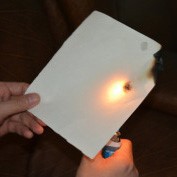
Flame-retardant paper is a specialized fire-resistant material achieved through physical modification or the incorporation of chemical additives. Based on manufacturing processes, it can be broadly categorized into two types: asbestos-fiber-based fireproof paper and paper modified with flame retardants; however, due to the health risks posed by asbestos fibers, their use is now subject to significant restrictions. Preparation methods primarily include in-pulp addition, coating, and impregnation techniques. The core technology lies in the selection and modification of flame retardants-such as microencapsulated ammonium polyphosphate, bio-based composite flame retardants, and flame-retardant systems based on melamine-formaldehyde resins. This material exhibits flame-retardant properties characterized by a Limiting Oxygen Index (LOI) of ≥27%, while simultaneously retaining the paper's original strength and flatness. Furthermore, novel flame-retardant systems allow the paper to maintain its flexibility (with a folding endurance of ≥200 cycles) while reducing smoke density during combustion by over 40%; this enables the material to meet the EN 13501-1 Class A2 standard for the fire classification of construction products. Under high-temperature conditions, it forms a carbonized layer that effectively isolates the underlying material from oxygen and combustible volatile substances.
Its primary applications span various fields, including architectural decoration, electronic packaging, oil-water separation filter paper, flue gas filtration bags, aerospace-grade paper, heatable paper food containers, and electrical insulation materials. As of 2023, a comprehensive technical framework has been established, encompassing testing standards, production processes, and application validation. In 2025, patents emerged specifically addressing drying and setting systems for flame-retardant paper processing, as well as flame-retardant paper formulations based on melamine-formaldehyde resins.