Core Definitions: Fundamental Differences
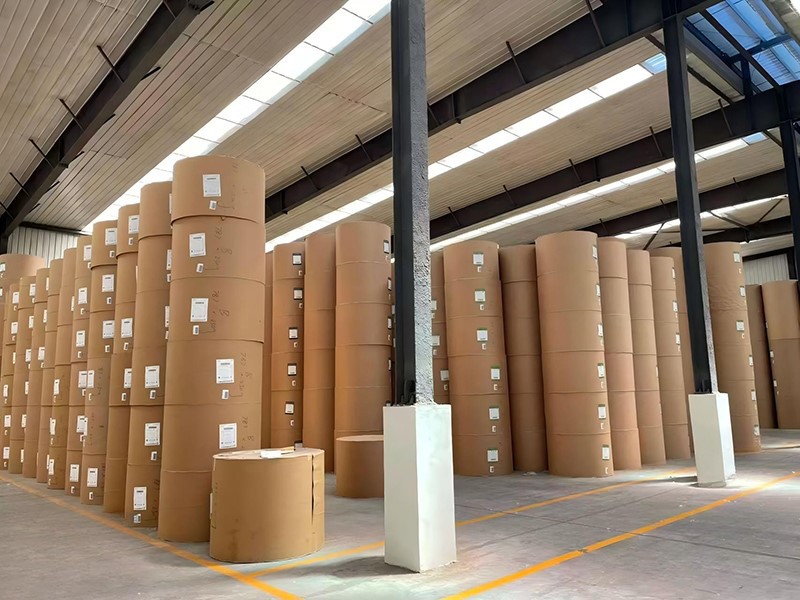
Release Base Paper: Refers to raw paper that has not undergone any coating treatment. Typically made from wood pulp or cotton pulp, it features a rough surface and lacks anti-stick properties; it serves primarily as a substrate for subsequent processing (such as silicone coating). Common basis weights range from 60 to 120 g/m² (Source: *China Paper Industry Yearbook 2022*).
Release Paper: The finished product resulting from coating release base paper with release agents-such as silicone oil or fluorides. It features a smooth surface and stable anti-stick properties, making it suitable for direct use as a protective layer for products such as labels and adhesive tapes.
Example: The release force (peel force) of release paper typically ranges from 5 to 50 g/inch (according to 3M technical manuals), whereas release base paper-being untreated-exhibits a peel force of 0.
Key Distinctions: From Production to Application
Production Process
Release Base Paper: Requires only standard papermaking processes, resulting in lower production costs.
Release Paper: Requires additional coating and curing steps (with silicone oil coating weights typically ranging from 0.8 to 1.2 g/m²). The process is more complex, leading to a 30% to 50% increase in production costs.
Application Scenarios
Release Base Paper: Primarily found in coating facilities for secondary processing.
Release Paper: Used directly as a backing paper for self-adhesive products, medical patches, etc.-for instance, the specialized release paper used for Avery Dennison labels.
User Decision Guide
Choose Release Base Paper: If you intend to perform the coating process in-house or prioritize cost control.
Choose Release Paper: If you require a ready-to-use anti-stick solution-for example, silicone-coated release paper for food packaging that meets FDA certification standards.